isaca


The AVIXA Certified Technology Specialist - Installation (CTS-I) certification stands as a globally recognized credential for professionals specializing in audiovisual system installation. This certification, offered by AVIXA, validates an individual’s expertise in installing and maintaining AV systems according to industry standards. It demonstrates a foundational understanding of installing AV systems, including signal flow, rack building, system wiring, and troubleshooting common issues. This comprehensive guide serves as a quick-start FAQ, designed to clarify the purpose of AVIXA certifications, particularly CTS-I, for individuals looking to enhance their career in the dynamic audiovisual industry. It will cover who should pursue this certification and what insights this article provides for your journey.
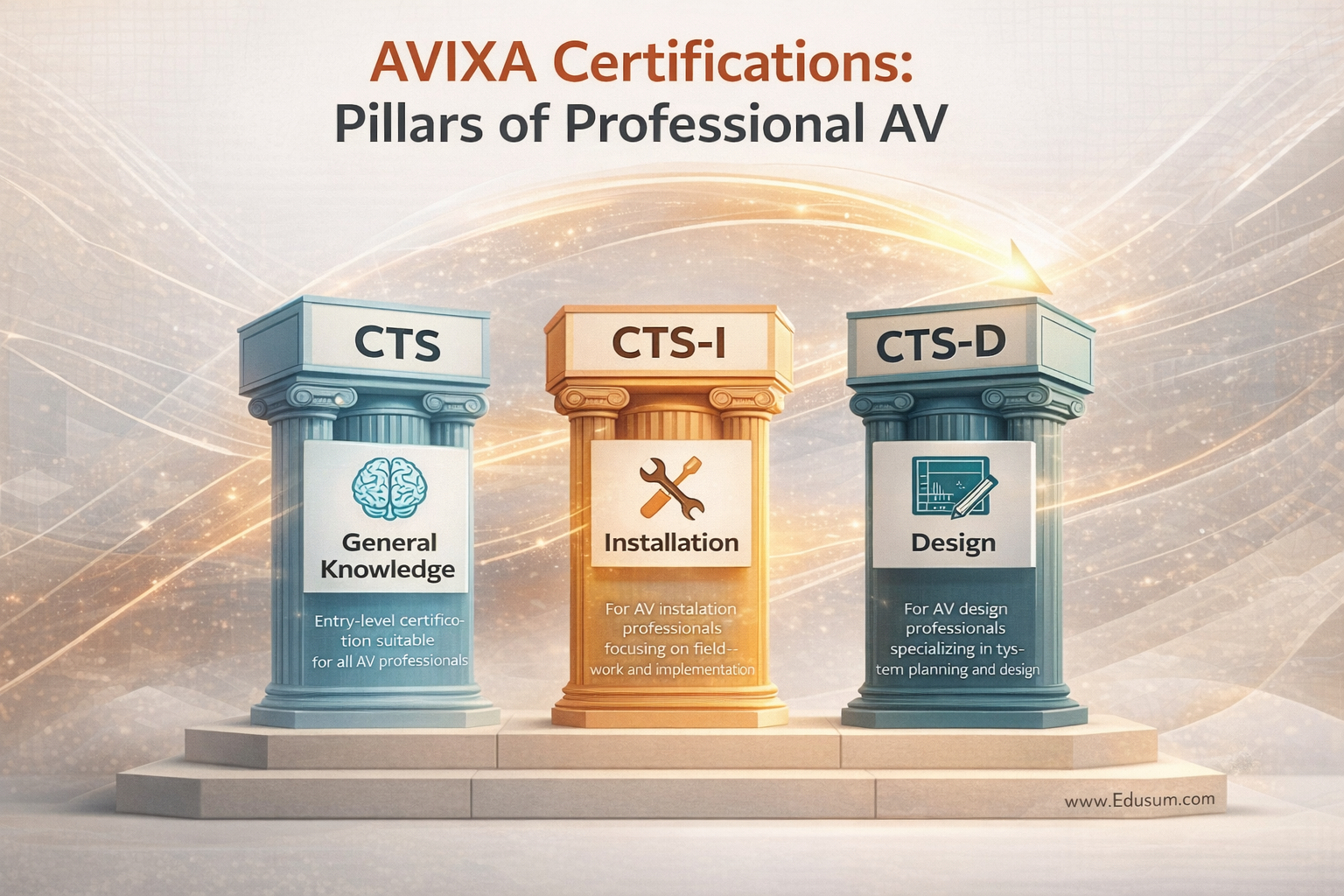
AVIXA offers a tiered certification program designed to validate skills and knowledge across various audiovisual disciplines. These credentials establish a common language and set of best practices within the professional AV industry, ensuring that certified individuals meet rigorous standards. The program includes the foundational CTS, the specialized CTS-I for installation, and the advanced CTS-D for design. These certifications collectively build a framework for professional development and recognition.
The Certified Technology Specialist (CTS) is AVIXA's introductory certification, serving as a benchmark for general knowledge across the AV industry. It covers essential topics such as AV math, signal types, networking basics, and project management fundamentals. Professionals typically pursue the CTS credential first to establish a broad understanding before specializing. This initial certification proves a core level of competence that is valuable for any role within the AV sector. To explore more about these essential AV certifications, consider reviewing the comprehensive overview available.
The AVIXA CTS-I certification specifically targets individuals who install AV systems. It validates advanced skills in cabling, mounting, system commissioning, and troubleshooting. Holders of this credential demonstrate proficiency in interpreting AV designs, implementing physical installations, and ensuring system functionality. It is critical for technicians responsible for the physical deployment of AV solutions, confirming their ability to execute complex installations reliably and efficiently.
For those focused on the strategic planning and engineering of AV solutions, the AVIXA CTS-D (Certified Technology Specialist - Design) certification is the pinnacle. This credential emphasizes needs analysis, system design principles, signal management, and network infrastructure for AV. It signifies a high level of expertise in creating robust and effective AV systems from concept to blueprint, distinguishing professionals who architect complex solutions.
The AVIXA CTS-I certification is specifically tailored for audiovisual technicians who are directly involved in the physical installation of AV systems. This credential validates an individual's ability to interpret blueprints, safely and effectively install AV equipment, configure systems, and perform essential troubleshooting. Achieving the AVIXA CTS-I credential signifies a commitment to professional excellence and adherence to industry best practices in AV installation.
A professional holding the AVIXA CTS-I certification possesses a verified skill set crucial for successful AV deployments. These competencies ensure that installations are not only functional but also reliable and compliant with safety standards. Key areas of expertise include:
System Mounting: Securely installing displays, projectors, and speakers.
Cable Management: Routing, terminating, and testing various AV cables according to industry standards.
Rack Building: Assembling and wiring equipment racks for optimal performance and accessibility.
System Configuration: Performing basic setup and configuration of AV components.
Troubleshooting: Diagnosing and resolving common installation-related issues.
Documentation: Creating accurate installation documentation and as-built drawings.
These validated skills are directly applicable in diverse AV environments, ensuring that certified professionals can confidently tackle a wide range of installation challenges. For more details on the AVIXA CTS-I credential and its scope, visit the official AVIXA CTS-I page.
CTS-I certified professionals are indispensable in a variety of real-world contexts. They are often the hands-on implementers who transform a design concept into a functioning system. Their expertise is critical in:
Corporate Boardrooms: Installing complex video conferencing and presentation systems.
Higher Education: Setting up classroom technology, lecture capture, and campus-wide AV networks.
Live Events & Venues: Deploying temporary or permanent sound and video systems for performances and conferences.
Control Rooms: Integrating multi-screen display walls and command center AV.
Residential Custom Integration: Installing sophisticated home theater and smart home AV solutions.
In each scenario, the CTS-I certification assures clients and employers that the installer possesses the knowledge and skills to perform the job efficiently and to a high professional standard.
Earning the AVIXA CTS-I certification can significantly elevate a professional's career trajectory within the audiovisual industry. This credential provides a competitive edge, opening doors to more advanced roles and greater earning potential. It serves as a tangible demonstration of expertise and a commitment to maintaining high standards of AV installation.
The benefits of holding a CTS-I certification extend beyond personal skill development to include measurable career advantages. Professionals with this credential often experience:
Enhanced Credibility: Employers and clients recognize the CTS-I as a mark of quality and reliability in AV installation.
Increased Marketability: The certification makes individuals more attractive to potential employers seeking skilled AV technicians.
Professional Recognition: Being part of an elite group of certified professionals often leads to peer recognition and respect.
Project Leadership Opportunities: Certified installers are frequently trusted with more complex projects and leadership roles due to their proven expertise.
Networking Opportunities: Certification can connect professionals with a broader network of industry experts and potential collaborators.
These advantages contribute to a stronger professional profile and a more rewarding career path. Earning this certification is a strategic move to boost your AV career and establish your expertise in the field.
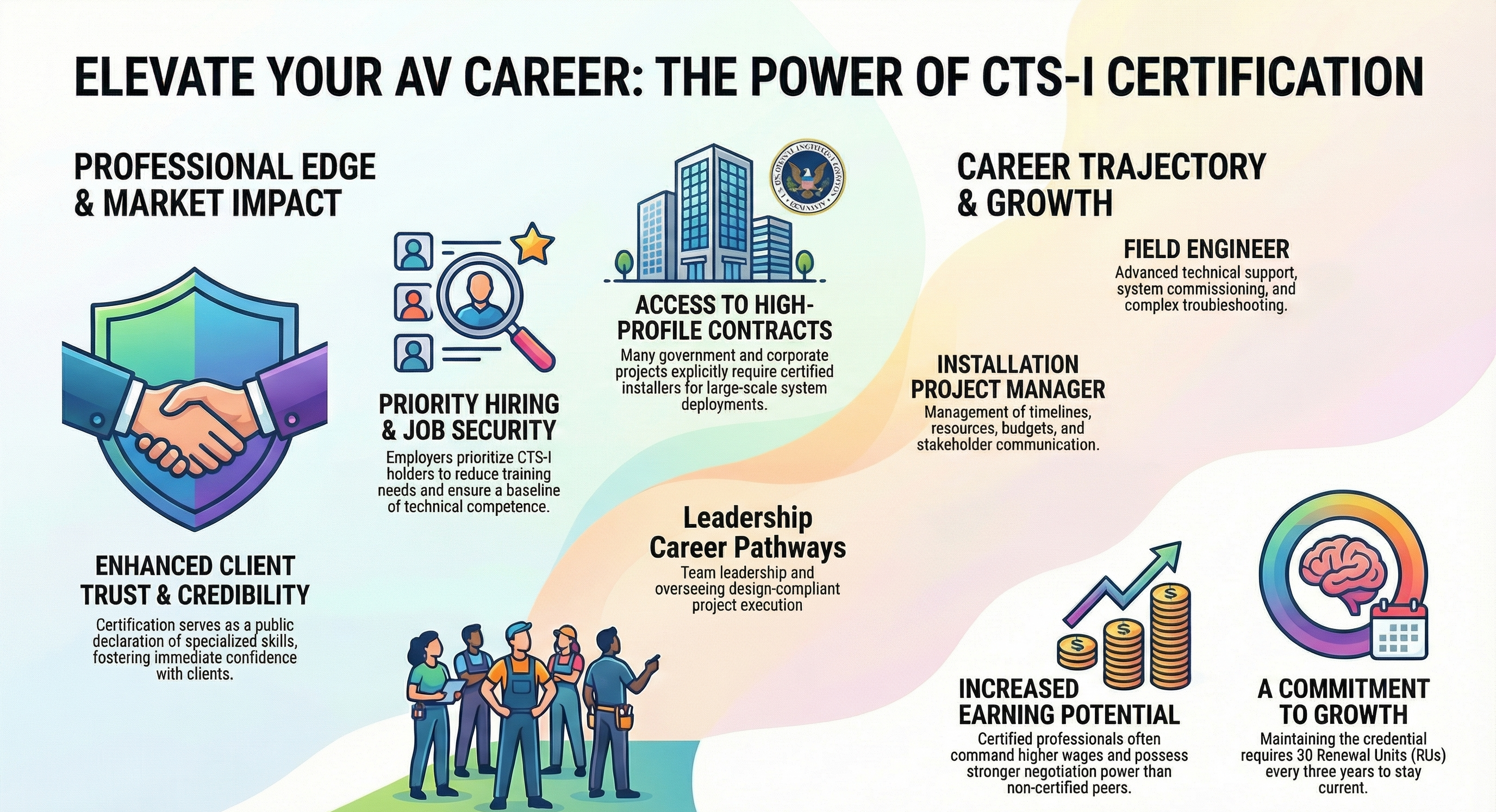
The demand for qualified AV technicians continues to grow, and CTS-I certified professionals are particularly sought after. Their specialized skills are critical for integrating advanced AV systems in various sectors. This demand often translates into higher salary expectations and a wider array of job opportunities. Certified individuals may find themselves eligible for positions such as:
Senior AV Installation Technician
Lead AV Integrator
Audiovisual Project Foreman
Field Engineer (AV)
Systems Commissioning Specialist
Moreover, the continuous advancement in AV technology ensures that professionals with up-to-date certifications remain highly valuable, contributing to long-term career stability and growth.
Before embarking on the AVIXA CTS-I certification journey, it's essential to understand the requirements and prerequisites set forth by AVIXA. While there are no formal prerequisites in terms of holding the foundational CTS exam, AVIXA strongly recommends that candidates possess practical experience in AV installation. This practical knowledge is crucial for successfully passing the rigorous CTS-I exam.
AVIXA generally advises candidates to have at least two years of hands-on experience in the audiovisual industry, specifically in installation roles. This experience should involve a broad range of tasks, including:
Working with various AV equipment: Displays, projectors, audio systems, control systems.
Understanding signal flow: Digital and analog video/audio signals.
Proficiency in cabling and termination: Including different cable types and connectors.
Familiarity with safety standards: Electrical, structural, and working at heights.
Reading and interpreting blueprints: Understanding system diagrams and specifications.
While this experience is a recommendation, not a strict rule for application, the exam content assumes this level of practical understanding. Candidates without sufficient practical experience may find the exam significantly more challenging.
The path to becoming AVIXA CTS-I certified typically involves several key steps:
Self-Assessment: Evaluate your current knowledge and experience against the CTS-I exam content outline.
Training and Study: Enroll in AVIXA-approved training courses or utilize self-study materials to fill knowledge gaps.
Application: Complete the application process through AVIXA's certification portal.
Exam Scheduling: Schedule your exam at an authorized testing center.
Taking the Exam: Pass the multiple-choice exam.
Maintaining Certification: Fulfill continuing education requirements to keep the certification current.
Adhering to these steps ensures a structured and effective approach to earning your CTS-I credential.
Successful preparation for the AVIXA CTS-I exam demands a structured approach, combining theoretical knowledge with practical application. Given the hands-on nature of the certification, a balanced study plan is crucial. This involves utilizing a variety of resources and committing to consistent study habits to cover all relevant domains thoroughly.
A well-thought-out study plan begins with understanding the exam's content outline. While specific domain weightings were not provided, candidates should focus on key areas such as:
Installation Procedures: Mounting, cabling, rack assembly, and infrastructure.
System Components: Understanding various AV devices and their interconnections.
Troubleshooting: Diagnostic methods for common installation errors.
Safety Standards: Adherence to electrical and structural codes.
Documentation: Creating accurate system drawings and reports.
Allocate study time proportional to the depth and complexity of each topic. Consistency is key; brief, regular study sessions are often more effective than infrequent, long ones.
AVIXA provides a range of official resources to support CTS-I candidates, including recommended courses and study guides. These resources are designed to align directly with the exam objectives. Additionally, supplementing these with other learning materials can be beneficial:
AVIXA Training Courses: Participate in instructor-led or online courses specifically for CTS-I.
Official Study Guides: Review AVIXA's published study materials.
Industry Journals and Publications: Stay updated on current AV trends and best practices.
Hands-on Experience: Reinforce theoretical knowledge with practical work in AV installation.
Practice Questions: Utilize resources like Edusum to test your knowledge and identify areas for improvement. Mastering the CTS exam requires a proven approach, and practice can be a key component, as detailed in this proven guide to becoming a certified technology specialist.
Engaging with practice questions and scenario-based exercises is invaluable for the CTS-I exam. These not only help in retaining information but also in understanding how concepts are applied in real-world situations. It’s crucial to prioritize ethical study practices, focusing on genuine understanding rather than attempting to memorize specific questions from unauthorized sources. Ethical preparation ensures long-term skill acquisition and maintains the integrity of the certification.
Approaching the AVIXA CTS-I exam with a clear understanding of its format and what to expect can significantly reduce test anxiety and improve performance. While specific exam duration, number of questions, or passing scores are not detailed, candidates should anticipate a comprehensive assessment of their installation expertise.
The CTS-I exam is designed to be challenging, ensuring that only highly competent professionals earn the credential. Candidates often find particular areas demanding:
Scenario-Based Questions: Applying theoretical knowledge to practical installation problems.
Technical Specificity: Detailed questions on cable types, signal standards, and equipment specifications.
Time Management: Effectively allocating time across all questions to complete the exam within the allotted period.
Broad Coverage: The exam covers a wide array of installation topics, requiring comprehensive preparation.
Familiarity with these potential challenges allows candidates to adjust their study strategies and mental preparation accordingly.
On the day of the exam, a few best practices can contribute to a more positive and successful experience:
Rest Adequately: Ensure you are well-rested to maintain focus throughout the exam.
Arrive Early: Allow ample time to reach the testing center, settle in, and complete check-in procedures without rush.
Read Questions Carefully: Pay close attention to every word in the question and all answer choices before selecting.
Manage Time Strategically: If you're stuck on a question, mark it for review and move on, returning to it later if time permits.
Stay Calm: Deep breathing and mindfulness techniques can help manage stress during the exam.
These tips aim to optimize your performance and ensure you can demonstrate your full capabilities effectively.
For AV professionals, deciding between the CTS-I (Installation) and CTS-D (Design) certifications is a critical career choice. Both are advanced AVIXA credentials, but they validate distinctly different skill sets, aligning with different professional trajectories within the audiovisual industry.
The fundamental difference lies in their primary focus:
CTS-I: Concentrates on the physical implementation, configuration, and troubleshooting of AV systems. It's for the hands-on technician who brings designs to life, ensuring optimal performance and adherence to installation standards. This includes cable routing, equipment mounting, and system integration.
CTS-D: Focuses on the conceptualization, engineering, and documentation of AV systems. It's for the professional who plans and architects solutions, translating client needs into technical specifications and system diagrams. This involves signal flow, network integration, and environmental considerations.
An individual's day-to-day responsibilities and long-term career aspirations should guide this decision. If your passion is in the meticulous execution and physical deployment of technology, CTS-I is likely the better fit. If you are more inclined towards conceptualizing complex systems and solving challenges on a drawing board, CTS-D would be more suitable.
Your existing experience and desired career progression should heavily influence your choice. Many professionals start with the foundational CTS, then branch out. Consider these factors:
Current Role: Are you primarily installing, or are you involved in system planning and client consultations?
Future Ambitions: Do you aspire to lead installation teams, or move into system engineering and consultancy?
Skill Set: Are your strengths in practical execution or in theoretical design and problem-solving?
Industry Demand: While both are in high demand, local market trends might favor one specialization over the other.
It is also possible to pursue both CTS-I and CTS-D over time, becoming a highly versatile AV professional, though this typically occurs sequentially after gaining significant experience in each domain.
AVIXA certifications, particularly the CTS-I, offer a robust pathway for audiovisual professionals to validate their expertise and significantly advance their careers. This credential affirms a technician's ability to expertly install, configure, and troubleshoot complex AV systems, ensuring high standards of quality and reliability. By investing in a CTS-I, professionals not only gain industry recognition but also unlock new opportunities for growth, higher earning potential, and leadership roles within the dynamic AV industry. It underscores a commitment to excellence that resonates with employers and clients alike, making it an invaluable asset for anyone serious about their AV career.
Ready to take the next step in your professional journey? Explore how the AVIXA CTS-I investment can transform your career prospects and solidify your standing as a certified technology specialist in installation. The path to becoming a highly recognized AV professional begins with informed decisions and dedicated preparation.
1. What does AVIXA CTS-I certification stand for?
The AVIXA CTS-I certification stands for Certified Technology Specialist - Installation. It is a credential that validates a professional's expertise in the physical installation and integration of audiovisual systems, adhering to industry best practices and standards.
2. Who should pursue the AVIXA CTS-I certification?
The CTS-I certification is ideal for AV technicians, installers, and field engineers who are actively involved in the hands-on deployment, configuration, and troubleshooting of AV equipment. It suits those aiming to demonstrate advanced installation proficiency and seek career advancement in AV integration.
3. Are there prerequisites for the AVIXA CTS-I exam?
While AVIXA does not mandate specific prerequisites like holding the CTS credential, they strongly recommend candidates have at least two years of professional experience in AV installation. This practical experience is crucial for understanding the real-world application of the exam's theoretical concepts.
4. How does CTS-I differ from CTS-D?
CTS-I focuses on the physical installation and implementation of AV systems, covering cabling, mounting, and troubleshooting. CTS-D (Certified Technology Specialist - Design) focuses on the planning, engineering, and documentation of AV systems from a conceptual standpoint, dealing with system architecture and signal flow design.
5. What are the career benefits of obtaining CTS-I certification?
Obtaining CTS-I certification offers numerous career benefits, including enhanced credibility, increased marketability, access to higher-paying job roles like Lead AV Installer or Project Foreman, and professional recognition within the AV industry. It demonstrates a commitment to quality and technical excellence.