
CompTIA certifications serve as foundational stepping stones for countless aspiring IT professionals, validating essential skills across diverse technological domains. For newcomers to the information technology landscape, the certification path might seem daunting, yet achieving a CompTIA credential is entirely within reach with a structured approach and effective study resources. This article delves into why CompTIA certifications are ideal for beginners, highlights the most accessible options, outlines strategic preparation methods, and emphasizes how CompTIA practice tests for beginners on EduSum can significantly enhance readiness and confidence. Here, we clarify the purpose of these certifications, identify the target audience for various exams, and detail how this comprehensive guide will help you navigate your initial CompTIA journey.
Launching Your IT Career with CompTIA Foundations
Embarking on an IT career requires a solid knowledge base, and CompTIA certifications provide exactly that. As a globally recognized vendor, CompTIA sets industry standards for foundational IT skills, making its certifications invaluable for individuals entering the field. These credentials validate a practical understanding of core technologies, from hardware and networking to cybersecurity and cloud computing, serving as a universal language for employers seeking competent entry-level talent. By earning a CompTIA certification, beginners not only gain critical technical expertise but also demonstrate a commitment to professional development, distinguishing themselves in a competitive job market.
The journey often starts by understanding the broad array of certifications available and selecting the one that best aligns with burgeoning career interests. CompTIA offers a hierarchical structure, allowing individuals to build skills progressively, starting with entry-level exams designed specifically for those with minimal prior experience.
Recognizing the Value of Industry-Standard Certification
CompTIA certifications are more than just badges; they are trusted benchmarks for IT competency. Employers worldwide rely on these credentials to identify candidates who possess the fundamental skills necessary to perform various IT roles effectively. For a beginner, this translates into improved job prospects, higher earning potential, and a clear career trajectory. The certification process itself acts as a structured learning pathway, ensuring comprehensive coverage of relevant topics and practical scenarios that mirror real-world IT challenges.
Identifying the Optimal CompTIA Starting Points for Newcomers
Navigating the extensive CompTIA certification catalog to find the "easiest CompTIA certification for beginners" can be a crucial first step. While no certification is truly easy without dedicated effort, some are specifically designed to be entry-level, requiring little to no prior experience and building foundational knowledge incrementally. These serve as excellent springboards into more specialized areas of IT. The most frequently recommended starting points include CompTIA A+, CompTIA Network+, and CompTIA Security+, each addressing a distinct but interconnected facet of information technology.
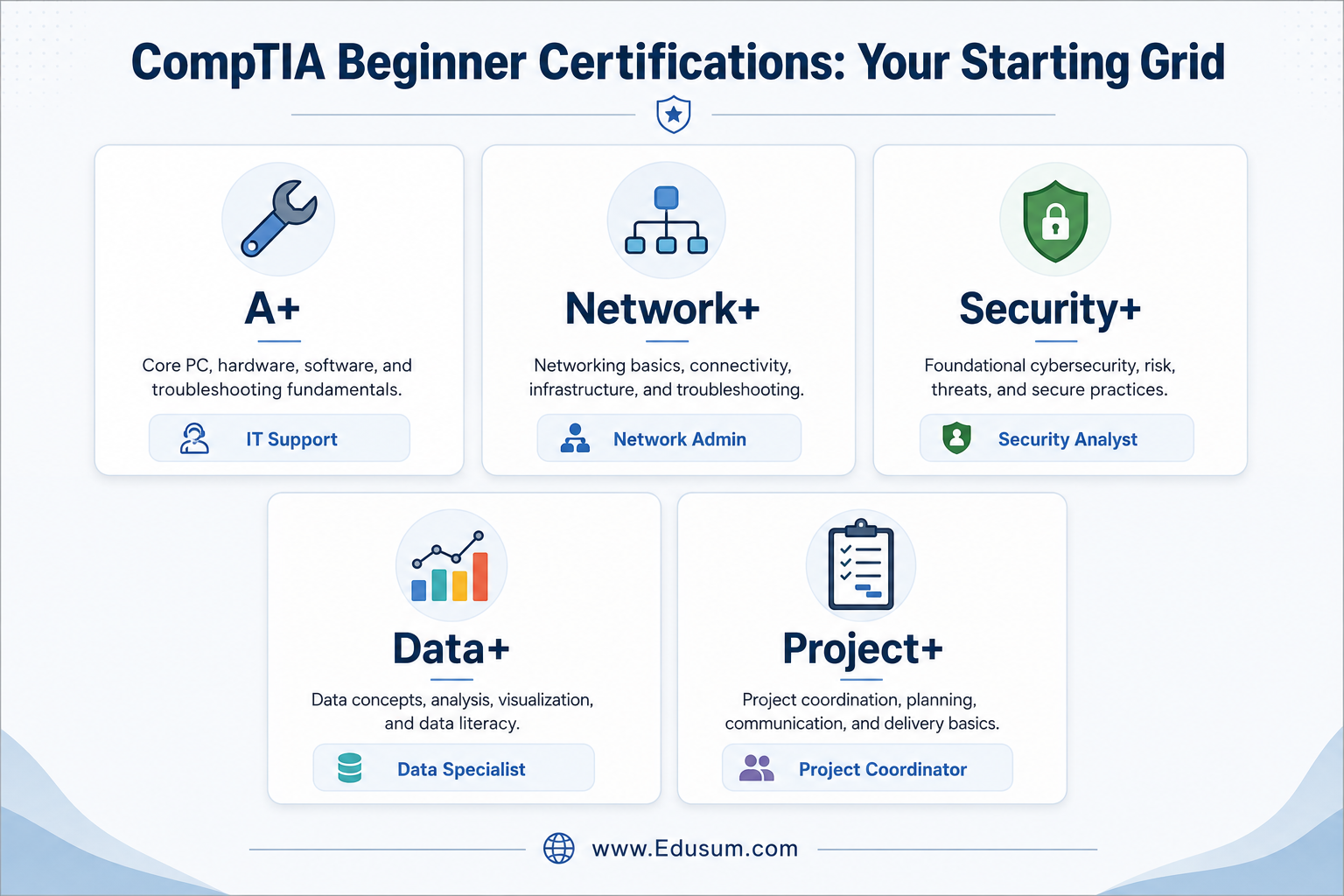 Selecting the right initial certification depends largely on an individual's career aspirations. Whether it's directly supporting end-users, managing network infrastructures, or safeguarding digital assets, CompTIA provides a clear pathway. The focus for beginners should always be on building a robust understanding of core concepts rather than rushing through an exam.
CompTIA A+ Core 1 (220-1201) and Core 2 (220-1202) for Foundational IT
The CompTIA A+ certification is widely considered the industry standard for establishing a career in IT support. It comprises two exams, Core 1 (220-1201) and Core 2 (220-1202), both designed for individuals with approximately 9-12 months of experience in the field, though many ambitious beginners tackle it sooner. A+ covers a vast array of topics, validating skills essential for various entry-level IT roles. Core 1 focuses on mobile devices, networking technology, hardware, virtualization, cloud computing, and network troubleshooting. Core 2 delves into operating systems, security, software troubleshooting, and operational procedures.
This certification is perfect for aspiring help desk technicians, technical support specialists, or field service technicians. It provides a comprehensive understanding of how to install, configure, and troubleshoot common hardware and software, making it an indispensable credential for anyone looking to work directly with IT systems and users. For those preparing, understanding why your CompTIA A+ PDFs are sabotaging success can be a game-changer, emphasizing active learning over passive review.
Networking Fundamentals with CompTIA Network+ (N10-009)
Once an individual has a grasp of basic hardware and software, or if their interest lies specifically in network infrastructure, the CompTIA Network+ (N10-009) certification becomes the next logical step. This credential validates the essential knowledge and skills needed to design, configure, manage, and troubleshoot both wired and wireless networks. It covers a broad range of networking concepts, including network topologies, protocols, security, cloud technologies, and network administration.
Network+ is crucial for roles such as junior network administrator, network field technician, or network support specialist. It provides the fundamental understanding of network components and their interactions, which is vital in almost any IT environment. The N10-009 exam ensures candidates are equipped to work with various network devices and understand critical network security practices, preparing them for more complex networking challenges.
Securing Entry-Level Roles with CompTIA Security+ (SY0-701)
In today's digital landscape, cybersecurity is paramount, and the CompTIA Security+ (SY0-701) certification offers a robust entry point into this critical field. Designed for professionals with approximately two years of experience in IT administration with a security focus, it is also highly sought after by beginners who want to specialize in security from the outset. Security+ validates the core knowledge and hands-on skills required to assess the security posture of an enterprise environment, recommend and implement appropriate security solutions, monitor and secure hybrid environments, and comply with relevant laws and policies.
The SY0-701 exam covers a wide array of security topics, including threats, vulnerabilities, attacks, architecture, design, implementation, operations, and governance. It prepares individuals for roles like security administrator, help desk technician (with security focus), or junior IT auditor. Earning Security+ demonstrates a fundamental understanding of cybersecurity principles, making it a highly valued credential across industries.
Expanding Horizons: Advanced Beginner CompTIA Pathways
While A+, Network+, and Security+ form the core triumvirate for beginners, CompTIA offers a rich ecosystem of certifications that cater to more specialized interests within the IT domain. For those who have either gained foundational experience or have a specific career niche in mind, these certifications provide further depth and open doors to diverse professional roles. Exploring these options can help a beginner align their learning path more precisely with their long-term career goals, moving beyond generic IT support into specialized functions like project management, data analysis, or Linux system administration.
Each of these certifications, while potentially more focused, maintains CompTIA's commitment to practical, job-ready skills. They build upon core IT competencies, requiring a slightly more refined understanding of specific technologies and methodologies. This section explores several of these advanced beginner pathways, detailing their purpose and the unique opportunities they present.
Project Management Fundamentals: CompTIA Project+ PK0-005
For IT professionals who foresee themselves managing projects, timelines, and resources, the CompTIA Project+ (PK0-005) certification offers an excellent starting point. Unlike vendor-specific project management certifications, Project+ is industry-agnostic, validating an individual's ability to initiate, plan, execute, and close out projects, as well as their understanding of critical project lifecycle phases. It's suitable for IT professionals who coordinate or manage small-to-medium-sized projects.
The PK0-005 exam covers foundational project management concepts such as project basics, project constraints, communication, and risk management. It's an ideal certification for business analysts, project coordinators, or junior project managers, equipping them with the vocabulary and methodologies to effectively contribute to project success within an IT context.
Entering the Data Landscape: CompTIA Data+ DA0-002
The CompTIA Data+ (DA0-002) certification is tailored for professionals tasked with data analysis, interpretation, and reporting. In an increasingly data-driven world, the ability to extract meaningful insights from data is a highly valued skill. Data+ is designed for individuals with 18-24 months of experience in a business intelligence or data analyst role, but it's also approachable for ambitious beginners with a knack for numbers and logic.
This certification covers foundational data concepts, data mining, data manipulation, data analysis techniques, statistical methods, and visualization. It prepares individuals for roles such as data analyst, business intelligence analyst, or reporting analyst. The DA0-002 exam validates the ability to transform data into actionable insights, making it a critical asset for businesses of all sizes. For those embarking on this journey, understanding the secret to a calm CompTIA Data+ journey can provide invaluable perspective.
Exploring Open Source Environments: CompTIA Linux+ XK0-006
As Linux continues to be a dominant operating system in servers, cloud environments, and embedded systems, expertise in it becomes increasingly valuable. The CompTIA Linux+ (XK0-006) certification is designed for IT professionals who administer Linux systems in a variety of environments. It validates the skills required to manage Linux distributions, command-line tools, file systems, and common Linux services.
While requiring some familiarity with command-line interfaces, Linux+ is a robust certification for beginners aiming for roles like junior Linux administrator, technical support specialist, or web administrator. The XK0-006 exam covers system management, scripting, security, and troubleshooting, providing a comprehensive understanding of Linux operating system functions and operations.
Cloud Infrastructure Essentials: CompTIA Cloud+ CV0-004
The CompTIA Cloud+ (CV0-004) certification is an ideal credential for IT professionals who manage or deploy cloud infrastructure. With cloud adoption rapidly expanding, skills in cloud deployment, security, and maintenance are in high demand. Cloud+ validates the knowledge and skills needed to implement and maintain cloud technologies in a secure manner, across various platforms.
This certification is suitable for cloud engineers, data center administrators, or system administrators transitioning to cloud environments. The CV0-004 exam focuses on cloud concepts, infrastructure, security, operations, and troubleshooting. For beginners with some prior IT experience, Cloud+ offers a vendor-neutral path to understanding and working with essential cloud technologies, preparing them for more specialized cloud roles.
Server Administration Basics: CompTIA Server+ SK0-005
For those interested in the backend infrastructure that powers modern enterprises, the CompTIA Server+ (SK0-005) certification offers a vendor-neutral credential that validates the skills necessary to build, maintain, troubleshoot, and administer server hardware and operating systems. This certification covers server architecture, storage, networking, security, and disaster recovery within a server environment.
Server+ is targeted at server administrators, data center technicians, or IT support specialists with server responsibilities. The SK0-005 exam ensures candidates understand server hardware, software, and environments, making them capable of handling crucial server-related tasks. It's a valuable step for beginners aiming to specialize in server management and infrastructure.
Foundational Cybersecurity Skills: CompTIA CySA+ CS0-004 and PenTest+ PT0-003
For beginners with a foundational understanding of networking and security (perhaps after Security+), CompTIA offers more advanced cybersecurity credentials like CySA+ and PenTest+. The CompTIA Cybersecurity Analyst (CySA+) CS0-004 certification focuses on the practical application of security analytics, threat detection, and response. It's for security analysts, incident responders, or vulnerability analysts.
The CompTIA PenTest+ (PT0-003) certification, on the other hand, validates penetration testing and vulnerability assessment skills. It's for penetration testers, security consultants, or vulnerability testers. While not strictly "beginner" in the same vein as A+, these certifications are attainable for entry-level professionals with dedication and build upon fundamental IT knowledge to prepare for specialized cybersecurity careers.
Modern IT Operations: CompTIA AutoOps+ AT0-001 and CompTIA Tech+ FC0-U71
For those interested in automating IT operations or gaining a broad understanding of IT service management and support, CompTIA offers AutoOps+ and Tech+. The CompTIA AutoOps+ (AT0-001) certification is designed for IT professionals who need to develop, implement, and manage automation solutions. It covers automation concepts, scripting, orchestration, and continuous improvement.
The CompTIA Tech+ (FC0-U71) is a basic IT literacy certification, often for non-IT professionals or students, providing a broad overview of computer hardware, software, security, and networking. While Tech+ is a fundamental entry, AutoOps+ caters to beginners interested in the growing field of IT automation, validating skills crucial for efficiency in modern IT environments.
Optimizing Readiness: CompTIA Practice Tests for Beginners on EduSum
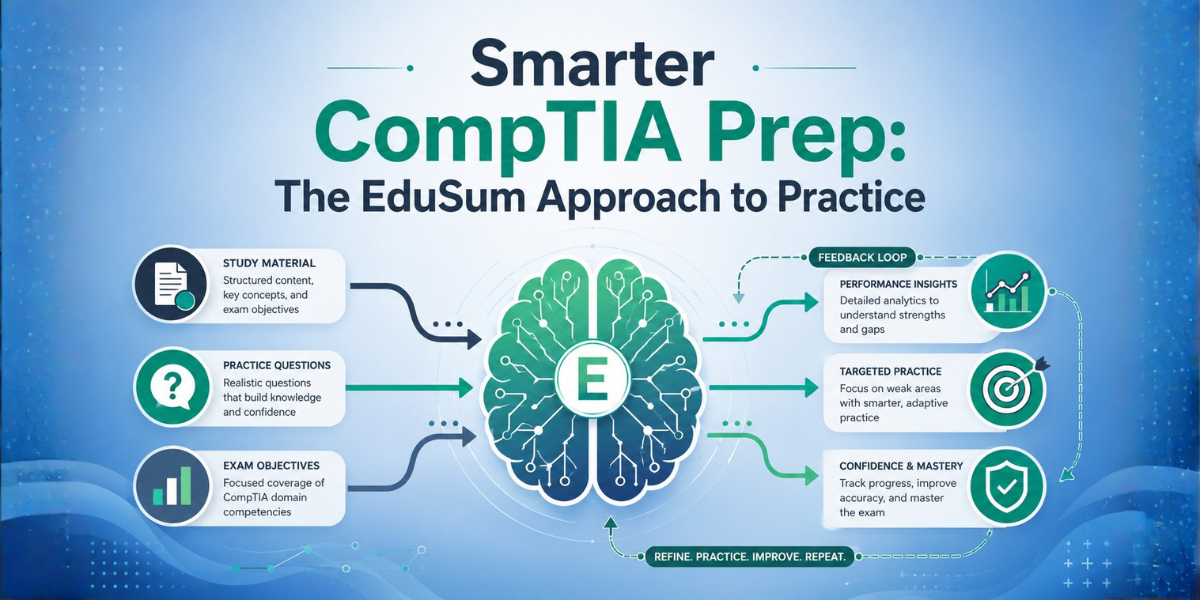
Successfully mastering a CompTIA certification exam requires more than just passive studying; it demands active engagement with the material and a keen understanding of the exam format. This is where EduSum's CompTIA practice tests for beginners become an indispensable tool. Practice tests are not merely quizzes; they are strategic learning instruments designed to simulate the actual exam environment, providing invaluable insights into a candidate's readiness and areas needing further attention. By engaging with high-quality practice questions, beginners can transform their theoretical knowledge into practical exam-taking proficiency.
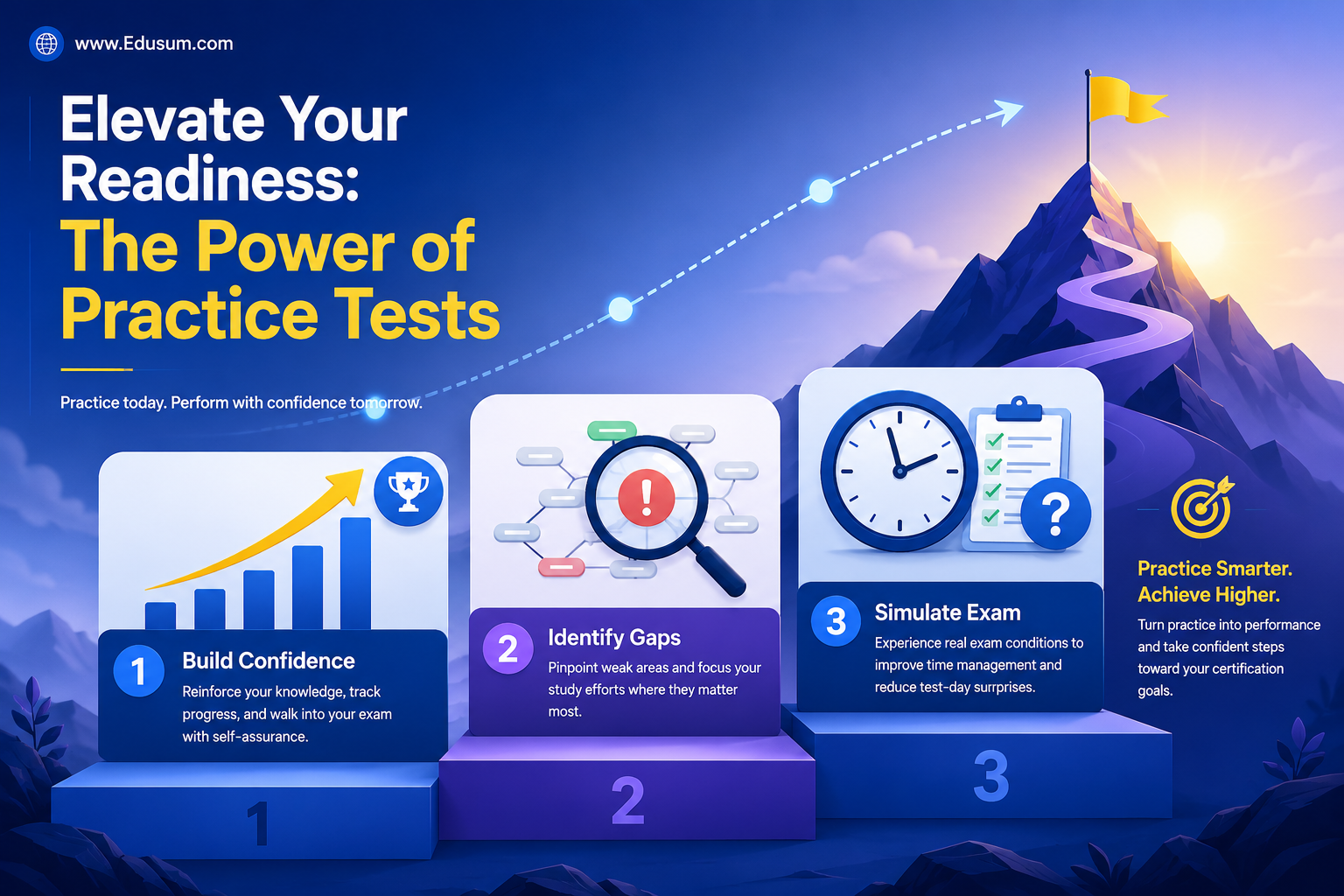 The value of practice tests extends beyond rote memorization. They help in developing critical thinking skills, improving time management under pressure, and reducing exam anxiety. For those new to certification exams, the structure and style of questions can be unfamiliar, and practice tests bridge this gap by offering a realistic preview of what to expect.
Building Exam Confidence and Readiness
One of the primary benefits of utilizing practice tests is the significant boost in confidence they provide. Repeated exposure to exam-like questions, coupled with immediate feedback, helps beginners understand the nuances of the CompTIA testing methodology. This familiarity reduces apprehension on exam day, allowing candidates to focus purely on the content rather than being surprised by the format or question types. Consistently performing well on practice tests builds a strong psychological foundation for success in the actual examination.
For example, preparing for CompTIA Security+ SY0-701 practice questions for beginners allows a candidate to develop a robust understanding of security scenarios and how to approach them under exam conditions. This iterative process of testing, reviewing, and re-testing solidifies knowledge and instills a sense of preparedness.
Identifying Knowledge Gaps Effectively
Practice tests are diagnostic tools. They pinpoint specific areas where a beginner's understanding might be weak or incomplete. Unlike simply reviewing study guides, which might overlook personal blind spots, practice exams actively challenge knowledge application. When a question is answered incorrectly, it signals a particular topic that requires further study, enabling targeted and efficient learning.
For individuals taking CompTIA Network+ (N+) N10-009 practice exams for beginners, identifying weaknesses in subnetting or routing protocols, for instance, allows them to revisit those specific concepts with a focused approach. This saves time and ensures that precious study hours are spent addressing genuine deficiencies rather than re-reviewing already mastered material.
Simulating Real Exam Conditions
The experience of taking a timed, multi-question exam can be intimidating. CompTIA practice tests for beginners on platforms like EduSum are designed to replicate the actual exam environment as closely as possible. This includes question types (multiple-choice, performance-based), timing, and interface. Familiarizing oneself with these elements under simulated conditions is crucial for developing effective test-taking strategies.
Simulating the exam helps beginners learn to pace themselves, manage stress, and handle performance-based questions (PBQs) which require hands-on configuration or troubleshooting. This experience is particularly beneficial for exams like CompTIA A+ Core 1 (220-1201) practice tests for beginners, where practical application of knowledge is heavily tested.
Strategic Preparation: Beyond Practice Questions
While practice tests are powerful tools, they are part of a broader, holistic preparation strategy. Achieving CompTIA certification success as a beginner requires a comprehensive approach that integrates various study methods, hands-on experience, and continuous learning. A well-rounded preparation plan ensures not only that you can pass the exam, but also that you truly understand the underlying concepts and can apply them in real-world IT scenarios. This comprehensive strategy goes beyond simply answering questions and delves into deep conceptual understanding and practical skill development.
Understanding the psychology behind practice exams and learning retention can further refine your study techniques.
Crafting a Personalized Study Schedule
Effective preparation begins with a structured study plan. For beginners, this means allocating dedicated time each day or week for studying, review, and practice. A personalized schedule should break down the certification objectives into manageable chunks, allowing for progressive learning without feeling overwhelmed. It's essential to be realistic about time commitments and to incorporate regular breaks to prevent burnout.
-
Daily Targets: Set specific topics or number of questions to cover each day.
-
Review Sessions: Schedule dedicated time to revisit challenging concepts and practice questions.
-
Flexibility: Adapt the schedule as needed, recognizing that some topics may require more time.
Integrating Hands-On Experience
Theoretical knowledge, while important, must be complemented by practical experience. Many CompTIA certifications, especially A+, Network+, and Security+, emphasize hands-on skills. For beginners, this might involve setting up a home lab, using virtualization software (like VirtualBox or VMware Workstation Player) to experiment with different operating systems and network configurations, or practicing command-line commands.
Active engagement with technology reinforces learning and helps solidify concepts. This could involve configuring a router, troubleshooting an operating system issue, or implementing basic security measures. Websites providing CompTIA A+ Core 2 (220-1202) practice tests for beginners often suggest practical exercises to go alongside theoretical study.
Leveraging Official Resources for Deeper Understanding
CompTIA provides a wealth of official resources, including study guides, online training, and even instructor-led courses. While third-party materials and sample CompTIA questions from EduSum are excellent for practice, official CompTIA materials offer the most accurate and in-depth coverage of exam objectives. Integrating these resources ensures that all critical topics are addressed directly from the source.
Utilizing a CompTIA Security+ SY0-701 study guide for beginners, for instance, alongside practice tests, creates a powerful learning synergy. The study guide provides comprehensive explanations, while practice tests assess understanding and application. Cross-referencing between these resources can clarify difficult concepts and reinforce learning.
Overcoming Common Beginner Hurdles
Beginners often face challenges such as information overload, lack of practical experience, and self-doubt. It's important to approach these hurdles with a proactive mindset. Breaking down complex topics into smaller, digestible parts, actively seeking opportunities for hands-on practice, and joining online study groups or forums can provide support and motivation.
Remember that every IT professional started as a beginner. Persistence, curiosity, and a willingness to learn from mistakes are key attributes for success. Focusing on one certification at a time, like the CompTIA Linux+ XK0-006 practice exams for beginners, can also help manage the learning curve.
Unlocking Career Potential with CompTIA Credentials
Earning a CompTIA certification is more than just passing an exam; it is an investment in one's professional future. For beginners, these credentials serve as powerful validation, signaling to potential employers that they possess the necessary foundational skills and a commitment to continuous learning. The impact of a CompTIA certification can be seen in enhanced job prospects, increased earning potential, and accelerated career growth within the dynamic field of information technology. Many employers actively seek candidates with these certifications, often making them a prerequisite for entry-level positions. Discover more about the CompTIA credential portfolio and its industry recognition.
The industry recognition that accompanies CompTIA certifications is significant. They are vendor-neutral, meaning the skills learned are applicable across a wide range of technologies and platforms, making certified professionals highly versatile and adaptable. This broad applicability ensures that the skills you acquire remain relevant regardless of specific vendor solutions an organization might utilize.
Opening Doors to Diverse IT Roles
CompTIA certifications act as a universal key, unlocking opportunities in various IT specializations. From help desk and technical support to networking, cybersecurity, and cloud administration, there's a CompTIA path for almost every aspiring IT professional. For example, the CompTIA Cloud+ CV0-004 practice questions for beginners prepare candidates for roles in cloud operations, while the CompTIA Server+ SK0-005 exam preparation for beginners targets server management positions. This versatility allows beginners to explore different areas of IT and find their niche with a solid foundational background.
Increasing Earning Potential and Job Security
Certified professionals often command higher salaries compared to their uncertified counterparts. This is due to the validated skills and confidence that certifications provide to employers. Beyond initial salary, CompTIA certifications foster continuous learning, leading to advanced certifications and further career progression, which in turn leads to even greater earning potential. Furthermore, in a rapidly evolving industry, maintaining relevant certifications enhances job security by ensuring skills remain current and in demand.
Establishing a Foundation for Advanced Certifications
CompTIA certifications are often prerequisite knowledge for more advanced, vendor-specific certifications (e.g., Microsoft, Cisco, AWS). By starting with CompTIA, beginners build a strong, vendor-neutral foundation that makes subsequent, more specialized learning much easier and more effective. This structured progression helps in building a robust professional profile over time, preparing individuals for leadership and expert roles in their chosen IT domains. For example, a CompTIA PenTest+ PT0-003 practice tests beginner guide sets a strong base for advanced ethical hacking or security engineering roles.
CompTIA isn't hard when approached with the right mindset and resources. For beginners, it represents a clear, structured pathway into the dynamic world of information technology. By focusing on foundational certifications like A+, Network+, and Security+, and diligently utilizing tools such as practice tests, success is not just possible but highly probable. EduSum provides valuable CompTIA sample questions that can significantly boost your preparedness.
Don't let the complexity of IT deter you. Embrace the learning journey, leverage comprehensive study strategies, and arm yourself with the best CompTIA practice tests for beginners. Begin your certification adventure today and unlock a world of professional opportunities. Explore EduSum's extensive resources and start your strategic preparation to master CompTIA certifications with confidence. For more insights into your next steps in IT, including resources for CompTIA Data+ and A+ Core exams, explore our articles on optimizing CompTIA A+ Core 2 preparation and discovering a calm CompTIA Data+ journey.
Frequently Asked Questions
Que. 1. Which CompTIA certification is truly the easiest for a complete beginner?
Ans.: For a complete beginner with no prior IT experience, the CompTIA A+ certification (comprising Core 1 and Core 2 exams) is generally considered the easiest and most foundational starting point. It covers basic hardware, software, networking, and security concepts crucial for entry-level IT support roles.
Que. 2. How long does it typically take a beginner to prepare for a CompTIA exam?
Ans.: Preparation time varies widely depending on the certification, prior knowledge, and daily study commitment. For A+, beginners might need 3-6 months of dedicated study (10-15 hours/week). Network+ and Security+ may require another 2-4 months each after A+ fundamentals are established.
Que. 3. Are CompTIA certifications worth it for someone new to IT?
Ans.: Yes, absolutely. CompTIA certifications are globally recognized industry standards that validate essential IT skills. For newcomers, they significantly enhance job prospects, increase earning potential, and provide a structured pathway to enter and advance within the IT profession, making them a worthwhile investment.
Que. 4. Can I prepare for CompTIA exams solely using online practice tests?
Ans.: While online practice tests are invaluable for exam simulation and identifying knowledge gaps, relying solely on them is not recommended. A comprehensive preparation strategy should include official study guides, video courses, hands-on labs, and supplemental reading alongside practice tests to build a deep, applicable understanding of the material.
Que. 5. What kind of job roles can a beginner get with CompTIA A+ or Network+?
Ans.: With CompTIA A+, beginners can pursue roles such as Help Desk Technician, Desktop Support Analyst, or Field Service Technician. Adding CompTIA Network+ opens doors to positions like Junior Network Administrator, Network Support Specialist, or Network Field Technician, laying a solid foundation for network-centric careers.