
The CREST Practitioner Threat Intelligence Analyst (CPTIA) certification, offered by CREST, is a globally recognized credential validating a professional's foundational knowledge and practical skills in threat intelligence analysis. This certification targets aspiring and practicing threat intelligence analysts, incident responders, and security professionals who aim to enhance their capabilities in identifying, analyzing, and disseminating actionable threat intelligence. This comprehensive resource roundup will explore why the CPTIA certification is a pivotal step for many, delve into essential preparation strategies, and highlight various valuable resources for achieving success on the CPTIA exam. We’ll cover everything from effective study methods to navigating common challenges, helping you understand what it takes to join the ranks of successful CPTIA passers.
Validating Threat Intelligence Expertise
Earning the CREST CPTIA certification signifies a practitioner’s robust understanding of the threat intelligence lifecycle, from planning and collection to processing, analysis, and dissemination. It assures employers that a certified individual can contribute effectively to an organization's threat intelligence capabilities, aiding in proactive defense strategies against evolving cyber threats. This foundational certification is crucial for those building a career in an increasingly sophisticated cybersecurity landscape where understanding adversary motives and methods is paramount. It serves as a benchmark for entry-level to mid-level professionals seeking to demonstrate their competence.
Demonstrating Core Analyst Competencies
The CREST CPTIA certification focuses on a broad spectrum of competencies essential for a threat intelligence analyst. Candidates are expected to showcase their ability to apply practical knowledge in real-world scenarios, making the certification highly valued in the industry. It covers areas that allow professionals to understand the various forms of threat intelligence, sources, and methods for its collection, along with techniques for analysis and reporting. The exam's practical orientation ensures that certified professionals possess not just theoretical knowledge but also the critical thinking skills required to operate effectively.
Building a Robust Foundation in Threat Analysis
For individuals embarking on a career in threat intelligence, the CPTIA certification establishes a strong academic and practical foundation. It systematically introduces the principles of threat intelligence, including its strategic, operational, and tactical applications. Professionals gain insights into structuring intelligence requirements, leveraging open-source intelligence (OSINT), and understanding various threat actors and their motivations. This structured learning process helps build a comprehensive skill set, enabling analysts to identify patterns, make informed predictions, and contribute to organizational resilience.
Assessing the Value of CREST CPTIA for Professionals
Considering the investment in time and resources, many professionals weigh the benefits of obtaining the CREST CPTIA certification. The credential stands out by providing a recognized standard for threat intelligence practitioners, offering significant advantages in career progression and professional credibility. It signals to employers a dedication to the field and a verified skill set directly applicable to defending against cyber adversaries. For a deeper perspective on the return on investment, consider exploring insights into the ROI in threat intelligence expertise.
Advancing Your Career Trajectory
The CREST CPTIA certification can significantly accelerate a professional's career in cybersecurity. With the growing demand for skilled threat intelligence analysts, certified individuals often find themselves in a stronger position for promotions or new job opportunities. It opens doors to specialized roles within security operations centers (SOCs), incident response teams, and dedicated threat intelligence units. Beyond immediate job prospects, it provides a structured pathway for continuous professional development, supporting growth into more senior analytical and leadership roles.
Recognized Credibility in a Competitive Field
In a field where practical experience often takes precedence, certifications like CREST CPTIA offer a tangible measure of validated skills. It serves as a seal of approval from a reputable industry body, enhancing a professional's credibility among peers and potential employers. This recognition is particularly important in differentiating candidates in a competitive job market. Certified individuals are seen as more reliable and capable, equipped with the knowledge to tackle complex threat landscapes.
Charting Your Path to CREST CPTIA Success
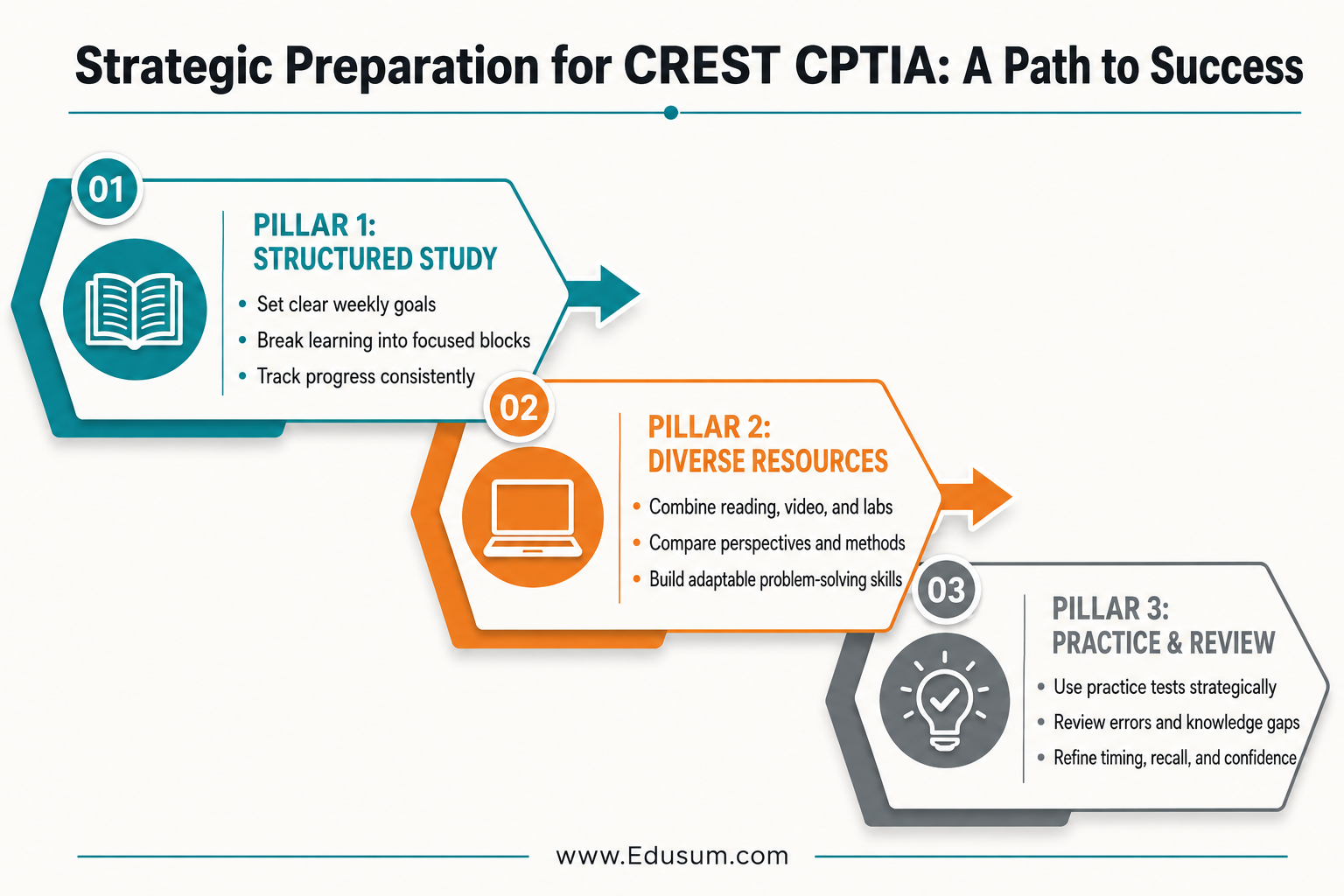
Successful preparation for the CREST CPTIA exam involves more than just memorizing facts; it requires a strategic approach that combines theoretical knowledge with practical application. Many successful candidates emphasize a multi-faceted study plan that integrates diverse learning materials and consistent practice. The key lies in understanding the exam’s objective to test practical analytical skills alongside conceptual knowledge. This involves dedicating time to not only absorb information but also to apply it critically.
Understanding Effective Study Methods
Effective study methods for the CPTIA exam typically involve a combination of self-study, formal training, and hands-on experience. Candidates often find success by:
-
Structured Learning: Following a well-defined study plan that systematically covers all domains.
-
Concept Mapping: Creating visual aids to connect complex threat intelligence concepts and methodologies.
-
Active Recall: Regularly testing oneself on topics to strengthen memory retention and identify knowledge gaps.
-
Scenario-Based Practice: Working through hypothetical threat intelligence scenarios to apply analytical frameworks.
This active engagement with the material is far more effective than passive reading, as it simulates the thought processes required during the actual examination.
Leveraging Diverse Learning Materials
To cover the breadth and depth of the CPTIA syllabus, candidates benefit from leveraging a variety of learning resources. These can include official CREST documentation, reputable cybersecurity books on threat intelligence, online courses, and community forums. Each resource offers a different perspective or format, helping to reinforce understanding. For an authoritative reference on the certification's scope, candidates should always consult the official CREST CPTIA page. This variety ensures that complex topics are understood from multiple angles, catering to different learning styles.
Navigating CREST CPTIA Exam Preparation
Preparing for the CPTIA exam requires a focused and well-structured strategy, especially considering the depth of knowledge required in threat intelligence analysis. Candidates often combine formal training with extensive self-study and practical application to build the necessary competencies. This approach ensures not only theoretical understanding but also the practical skills needed to interpret and respond to evolving threat landscapes. A strong preparation strategy is the cornerstone of success for any challenging certification.
Recommended Training Courses
While self-study is valuable, enrolling in dedicated CREST CPTIA training courses can provide structured learning, expert guidance, and peer interaction. These courses often dive deep into the exam domains, offering practical exercises and insights from experienced practitioners. Choosing a course that aligns with your learning style and existing knowledge level is crucial. Many providers offer both online and in-person options, allowing flexibility for professionals with varying schedules. Such courses can condense the learning curve and provide targeted preparation.
Strategic Use of Practice Tests
Practice tests are an indispensable tool for CPTIA exam preparation. They help candidates familiarize themselves with the exam format, question types, and time constraints. More importantly, they serve as diagnostic tools, highlighting areas where further study is needed. Engaging with comprehensive comprehensive exam resources that include practice questions is highly recommended. Analyzing both correct and incorrect answers from practice tests provides invaluable learning opportunities, reinforcing understanding and improving problem-solving speed. It’s not just about getting the right answers, but understanding *why* they are right or wrong.
Deep Dive into Key Concepts
The CREST CPTIA exam challenges candidates on a range of critical threat intelligence concepts. A deep understanding of these areas is essential, moving beyond surface-level definitions to grasp their practical implications. Key areas of focus include:
-
Threat Intelligence Lifecycle: Understanding the stages from direction to dissemination and feedback.
-
Threat Modeling: Applying frameworks like ATT&CK or Cyber Kill Chain to analyze adversary tactics.
-
Open Source Intelligence (OSINT): Techniques for gathering intelligence from publicly available sources.
-
Indicator Management: How to collect, validate, and utilize Indicators of Compromise (IoCs).
-
Reporting and Dissemination: Crafting clear, concise, and actionable intelligence reports for various audiences.
-
Legal and Ethical Considerations: Understanding the boundaries and responsibilities associated with intelligence gathering.
Mastery of these concepts will empower candidates to approach complex exam questions with confidence and analytical rigor. A review of the detailed CPTIA syllabus document is vital to ensure comprehensive coverage.
Common Obstacles and How to Overcome Them
Many candidates face hurdles during their CREST CPTIA preparation, ranging from information overload to managing exam anxiety. Recognizing these common obstacles early and developing strategies to mitigate them is key to a smoother and more successful certification journey. Proactive problem-solving during preparation can prevent these challenges from derailing your efforts. Understanding that others face similar difficulties can also provide a sense of reassurance and motivation.
Time Management Strategies for Busy Professionals
Balancing full-time work, personal commitments, and intensive study for a certification like CREST CPTIA can be challenging. Effective time management is paramount.
-
Create a Study Schedule: Allocate dedicated slots each week and stick to them, treating study time as non-negotiable appointments.
-
Break Down Material: Divide the syllabus into smaller, manageable chunks to avoid feeling overwhelmed. Focus on one or two domains at a time.
-
Prioritize Topics: Based on your strengths and weaknesses, allocate more time to complex or less familiar areas.
-
Utilize Micro-Learning: Leverage short breaks throughout the day for quick reviews, flashcards, or practice questions.
-
Schedule Regular Breaks: Prevent burnout by incorporating short, regular breaks into your study sessions and longer breaks over weekends.
Consistent, even short, study sessions are often more effective than infrequent, marathon sessions.
Handling Complex Scenario Questions
The CREST CPTIA exam often features scenario-based questions that require critical thinking and the application of multiple concepts simultaneously. These can be particularly daunting.
-
Deconstruct the Scenario: Break down the scenario into its core components, identifying the threat actor, target, tools, and objectives.
-
Identify Key Information: Filter out extraneous details and focus on the information directly relevant to the question.
-
Apply Frameworks: Mentally map the scenario to relevant threat intelligence frameworks (e.g., Cyber Kill Chain, MITRE ATT&CK) to structure your analysis.
-
Evaluate Options Critically: For multiple-choice questions, carefully analyze each option, considering why it might be correct or incorrect in the context of the scenario.
-
Practice with Detailed Explanations: Seek out practice questions that offer thorough explanations for both correct and incorrect answers to refine your analytical process.
Consistent practice with such questions will build confidence and improve your ability to quickly dissect and respond to complex situations.
Benefits Beyond the Credential's Name
While the CREST CPTIA certification is a valuable credential on its own, its benefits extend far beyond a line on your resume. It fosters a mindset of continuous learning, professional development, and community engagement that can profoundly impact a professional's career trajectory. These intangible benefits often contribute more significantly to long-term success and job satisfaction than the certificate itself. Professionals often find that the journey to certification enhances their overall workforce upgrade insights and adaptability.
Enhanced Professional Network and Collaboration
Pursuing and achieving CREST CPTIA connects you with a community of like-minded cybersecurity professionals. This network can be invaluable for sharing insights, seeking advice, and collaborating on projects. Attending training courses, conferences, or participating in online forums related to CREST certifications provides opportunities to build relationships with peers and industry leaders. Such connections can lead to new job opportunities, mentorship, and a broader understanding of industry trends. The collaborative nature of threat intelligence makes a strong network particularly beneficial.
Cultivating Continuous Skill Development
The process of preparing for CREST CPTIA instills a discipline of continuous learning. The dynamic nature of cyber threats means that threat intelligence analysts must constantly update their knowledge and skills. The certification journey encourages candidates to stay abreast of the latest attack techniques, defensive measures, and intelligence tools. This proactive approach to skill development is crucial for remaining effective and relevant in the fast-paced cybersecurity field, ensuring that your expertise remains sharp and up-to-date.
Comparing Threat Intelligence Certifications
The landscape of cybersecurity certifications can be complex, with several options available for threat intelligence professionals. Understanding how CREST CPTIA stands against other certifications, such as GIAC GCTI, can help individuals make an informed decision about which credential best suits their career goals and current skill level. Each certification has its unique focus and target audience, making a direct comparison essential.
CPTIA vs. GIAC GCTI: Key Distinctions
Both the CREST CPTIA and GIAC GCTI (GIAC Certified Threat Intelligence) certifications are highly respected in the threat intelligence community, but they cater to slightly different profiles and emphasize distinct aspects.
-
CREST CPTIA: Focuses on foundational, practitioner-level skills across the entire threat intelligence lifecycle, often with a strong emphasis on practical application and critical thinking for entry to mid-level analysts. It is recognized for its rigorous, hands-on examination approach.
-
GIAC GCTI: Typically aimed at more experienced professionals, GCTI delves deeper into advanced methodologies for creating, consuming, and sharing threat intelligence. It covers areas like advanced analysis techniques, structured analytic techniques, and the use of sophisticated tooling. GIAC exams are known for their challenging, knowledge-based, multiple-choice format.
The choice often depends on a professional's current experience, the specific depth of knowledge they seek, and their preferred learning and examination styles.
Choosing the Right Certification for Your Goals
Deciding between CREST CPTIA and other threat intelligence certifications depends on several factors:
-
Experience Level: If you are starting or have limited experience in dedicated threat intelligence roles, CPTIA might offer a more accessible entry point with a strong practical foundation. GCTI might be better suited for those with a few years of hands-on experience looking to specialize further.
-
Career Objectives: Consider the types of roles you aspire to. Some organizations might prefer CREST for its practitioner focus, while others might value GIAC for its advanced technical depth.
-
Learning Style: If you thrive with hands-on labs and practical assessments, CREST might be more appealing. If you prefer a comprehensive, knowledge-based approach with detailed courseware, GIAC might be a better fit.
-
Cost and Time Commitment: Evaluate the financial investment and time required for each certification, including training, exam fees, and study materials.
Thorough research into employer preferences in your target region and industry is also recommended.
Maximizing Your CREST CPTIA Investment
Obtaining your CREST CPTIA certification is a significant achievement, but the real value comes from how you leverage it in your professional life. Maximizing this investment means actively applying the acquired knowledge, staying engaged with the threat intelligence community, and continually evolving your skill set. The certification is a stepping stone, not a destination, in the journey of becoming an indispensable threat intelligence professional.
Applying Certification in Your Role Effectively
Once certified, actively seek opportunities to apply your CPTIA knowledge in your daily tasks. This could involve:
-
Enhancing Threat Hunting: Using intelligence to proactively search for threats within your network.
-
Improving Incident Response: Providing context and attribution for ongoing incidents.
-
Informing Security Strategy: Contributing to strategic planning by presenting threat landscapes relevant to your organization.
-
Mentoring Peers: Sharing your expertise with team members to uplift the collective intelligence capability.
Practical application not only reinforces your learning but also demonstrates tangible value to your employer and team.
Staying Current with the Evolving Threat Landscape
The cyber threat landscape is in a constant state of flux, with new adversaries, tactics, techniques, and procedures (TTPs) emerging regularly. To maintain the relevance of your CPTIA certification and your effectiveness as an analyst, continuous learning is non-negotiable. This involves:
-
Reading Industry Reports: Regularly consuming threat reports from reputable security vendors and intelligence organizations.
-
Following Security Research: Staying updated on new vulnerabilities, exploits, and security research papers.
-
Participating in CTFs: Engaging in Capture The Flag events or security challenges to sharpen practical skills.
-
Attending Webinars and Conferences: Learning from experts and networking with peers about emerging threats and defensive strategies.
By staying proactive in your learning, you ensure your CPTIA credential truly represents current, cutting-edge expertise.
Resource Roundup for Optimal Preparation
A well-rounded set of resources is crucial for comprehensive CREST CPTIA exam preparation. Beyond formal training and practice tests, a curated selection of study guides, books, and online communities can significantly enhance your understanding and retention of complex concepts. Leveraging these diverse materials can fill knowledge gaps and provide alternative explanations, catering to various learning preferences.
Curated Study Guides and Books
While there isn't one single "official" CPTIA study guide, several highly regarded books and resources cover the core domains:
-
Threat Intelligence Handbooks: Look for comprehensive guides on threat intelligence principles, frameworks, and methodologies. Books focusing on the MITRE ATT&CK framework and Cyber Kill Chain are particularly relevant.
-
OSINT Resources: Explore books and online guides dedicated to Open Source Intelligence gathering techniques and tools, as this is a significant component of threat intelligence.
-
Cybersecurity Fundamentals: Review materials that cover general cybersecurity concepts, networking, and common attack vectors, which form the broader context for threat intelligence.
Combining these types of resources will ensure you have a solid theoretical foundation.
Online Learning Platforms and Forums
Online platforms offer flexible learning opportunities, often including video lectures, interactive labs, and quizzes. Many reputable cybersecurity education providers offer courses aligned with threat intelligence certifications. Additionally, engaging with online forums and communities can provide invaluable support:
-
Cybersecurity Communities: Platforms like Reddit (r/cybersecurity, r/threatintelligence), LinkedIn groups, and Discord servers host discussions where you can ask questions, share insights, and learn from others' experiences.
-
Vendor-Specific Resources: Some cybersecurity vendors offer free or paid resources on threat intelligence, often including whitepapers, webinars, and tools.
-
MOOCs: Massive Open Online Courses from platforms like Coursera, edX, or Cybrary sometimes have modules or full courses dedicated to threat intelligence fundamentals.
These platforms offer continuous learning and support, complementing structured study.
Final Steps for Exam Day Confidence
The days leading up to your CREST CPTIA exam and the exam day itself are critical. Proper preparation for these final steps can significantly boost your confidence and performance. It’s not just about what you know, but how you manage the pressure and logistics of the testing environment. A well-executed plan can alleviate anxiety and allow you to focus purely on the questions.
Pre-Exam Routine and Logistics
A well-planned pre-exam routine helps ensure you are physically and mentally ready.
-
Review Key Concepts: In the final days, focus on a high-level review of summaries, flashcards, or your own notes rather than attempting to learn new material.
-
Rest and Nutrition: Prioritize adequate sleep and healthy meals. A well-rested mind performs better under pressure.
-
Confirm Logistics: Double-check the exam date, time, location (or online proctoring requirements), and required identification. Plan your travel or setup to avoid last-minute stress.
-
Stay Calm: Engage in light activities that help you relax. Avoid cramming, which can increase anxiety and diminish retention.
Being prepared for the logistical aspects allows you to conserve mental energy for the exam itself.
Strategies for Optimal Performance During the Exam
During the CPTIA exam, a strategic approach can help you manage time and tackle challenging questions effectively.
-
Read Questions Carefully: Pay close attention to keywords, qualifiers (e.g., "NOT," "ALWAYS," "EXCEPT"), and the specific task requested in scenario questions.
-
Time Management: Keep an eye on the clock. If a question is taking too long, make an educated guess, flag it for review if possible, and move on.
-
Eliminate Incorrect Options: For multiple-choice questions, eliminate obviously wrong answers first to increase your chances of selecting the correct one.
-
Stay Hydrated and Focused: If allowed, take short breaks to stretch or rehydrate. Maintain focus and avoid distractions.
Trust your preparation and approach each question systematically.
The CREST CPTIA certification serves as a robust foundation for any professional serious about a career in threat intelligence. It not only validates essential skills but also opens doors to advanced opportunities and fosters continuous professional growth. By meticulously planning your preparation, leveraging diverse learning resources, and strategically approaching the exam, you can significantly increase your chances of joining the successful 80% who have earned this credential. This certification is a testament to your commitment to cybersecurity and your ability to contribute meaningfully to an organization's defense posture.
Embark on your journey to becoming a certified CREST Practitioner Threat Intelligence Analyst with confidence. Explore comprehensive resources and structured guidance to prepare effectively. Visit Edusum.com for advancing threat intelligence careers and discover the tools you need to succeed in your certification endeavors.
Frequently Asked Questions
1. What is the CREST CPTIA certification?
The CREST Practitioner Threat Intelligence Analyst (CPTIA) is an entry-to-mid-level certification offered by CREST. It validates a professional's foundational knowledge and practical skills in the full threat intelligence lifecycle, from planning and collection to analysis and dissemination.
2. Who should pursue the CREST CPTIA certification?
This certification is ideal for aspiring and current threat intelligence analysts, security professionals, and incident responders seeking to formalize their expertise in threat intelligence and demonstrate their ability to apply analytical skills in real-world scenarios.
3. What are the primary benefits of earning CREST CPTIA?
Earning the CPTIA certification enhances career opportunities in cybersecurity, boosts professional credibility, and provides a structured foundation in threat intelligence analysis. It demonstrates a verified skill set to potential employers and within existing organizations.
4. How long does it typically take to prepare for the CREST CPTIA exam?
Preparation time for the CREST CPTIA exam varies depending on individual experience and study commitment. Candidates typically dedicate several weeks to a few months of focused study, often combining self-study with formal training and practice tests, to cover the comprehensive syllabus.
5. Is the CREST CPTIA certification recognized globally?
Yes, CREST certifications, including CPTIA, are recognized internationally within the cybersecurity industry. CREST is a respected body that sets high standards for technical cybersecurity professionals, making its certifications valuable across different regions and organizations.