
LPI
LPI Linux Essentials Practice Exam


The Microsoft SC-200 Certification, focusing on the Security Operations Analyst role, validates a professional's ability to respond to threats, investigate incidents, and remediate attacks using Microsoft Defender XDR, Microsoft Sentinel, and Microsoft Entra ID Protection. This credential is designed for individuals working in a Security Operations Center (SOC) environment who are responsible for managing and monitoring security solutions. This article thoroughly explores the value, career impact, skill validation, and preparation strategies for the SC-200 certification, providing a balanced perspective on its worth in today's cybersecurity landscape.
The SC-200 certification directly addresses the critical need for skilled security operations analysts capable of navigating Microsoft's extensive suite of security tools. It establishes a baseline of expertise, confirming that a candidate possesses the foundational and practical knowledge required to effectively identify, respond to, and mitigate cyber threats within an organization leveraging Microsoft technologies. This validation is increasingly important as more businesses migrate their infrastructure and services to cloud-based Microsoft platforms, making the ability to secure these environments a paramount concern.
Understanding the certification's core also involves recognizing the dynamic nature of cybersecurity itself. Threats evolve, and so do the tools and strategies to combat them. The SC-200 ensures that certified professionals are not just familiar with the technology, but can apply it in real-world scenarios to protect digital assets and maintain operational continuity. This focus on practical application over theoretical knowledge is a significant aspect of its design and value proposition.
A Security Operations Analyst is at the forefront of defense, monitoring systems for anomalous behavior, investigating potential incidents, and implementing countermeasures. They work to minimize the impact of security breaches and maintain the overall security posture of an organization. The SC-200 certification specifically trains individuals to perform these functions within the Microsoft ecosystem, covering a wide array of responsibilities that extend beyond simple monitoring.
These responsibilities typically include configuring and managing Microsoft Defender XDR, which integrates various Defender components such as Defender for Endpoint, Defender for Identity, and Defender for Cloud Apps. Analysts must also be proficient in using Microsoft Sentinel for security information and event management (SIEM), creating queries, building detection rules, and responding to incidents orchestrated within this platform. Furthermore, the role involves leveraging Microsoft Entra ID Protection to identify and remediate identity-based risks, which are increasingly common attack vectors.
Earning the Microsoft SC-200 certification can significantly bolster a cybersecurity professional's career trajectory. It demonstrates a specialized skill set that is highly sought after by organizations that have invested in Microsoft's security stack. In a competitive job market, this credential can differentiate candidates and open doors to more advanced roles and responsibilities within security operations. The certification signals to employers that an individual is committed to professional development and possesses current, relevant expertise.
Moreover, the SC-200 supports a structured career path, acting as a stepping stone towards more advanced Microsoft security certifications or specialized roles. For those already in security operations, it validates existing skills and can lead to promotions or increased compensation. For individuals aspiring to enter the cybersecurity field, it provides a clear, vendor-specific entry point that is directly applicable to many enterprise environments. The market demand for professionals capable of managing cloud security, especially within the Microsoft Azure ecosystem, continues to grow, underscoring the long-term relevance of this certification.
The demand for skilled security professionals continues to outstrip supply, and those with vendor-specific certifications like the SC-200 often find themselves with a distinct advantage. Organizations using Microsoft products for their security infrastructure actively seek candidates who can immediately contribute without extensive onboarding to new tools. This leads to increased job opportunities, not just in traditional security operations centers but also within managed security service providers (MSSPs) and internal IT security departments.
Holding the SC-200 certification can make a resume stand out to recruiters and hiring managers. It directly maps to job descriptions that require expertise in Microsoft Defender, Microsoft Sentinel, and identity protection. This alignment means that certified individuals are often fast-tracked through the hiring process, as their skills are pre-validated. The certification also provides a strong foundation for diverse security roles, from incident response to threat hunting, within Microsoft-centric environments. Discovering more about the real career value can offer further insights.
The SC-200 certification focuses on a practical, hands-on understanding of Microsoft security technologies, validating a set of critical skills essential for any security operations analyst. These skills are not merely theoretical; they involve the actual configuration, deployment, and management of security tools to protect an organization's assets. The exam measures a candidate's proficiency in using these tools to detect, investigate, and respond to threats efficiently and effectively.
Mitigating Threats Using Microsoft Defender XDR: Candidates learn to configure and manage Microsoft Defender for Endpoint to identify and block endpoint threats, integrate Defender for Identity for hybrid identity protection, and leverage Defender for Cloud Apps to secure SaaS applications. This comprehensive approach to XDR (Extended Detection and Response) is central to modern threat mitigation.
Detecting and Responding with Microsoft Sentinel: Proficiency in Microsoft Sentinel involves ingesting security logs, writing Kusto Query Language (KQL) queries for threat detection, creating analytics rules, and managing incidents within the SIEM platform. This enables proactive threat hunting and rapid incident response.
Managing Identity and Access Risks: The certification covers using Microsoft Entra ID Protection to detect compromised identities, configure conditional access policies, and implement multi-factor authentication (MFA) to prevent unauthorized access. This skill is vital for protecting user accounts and data.
Data Governance and Compliance: While primarily operational, the SC-200 indirectly supports data governance by enabling analysts to monitor and enforce security policies that contribute to regulatory compliance within Microsoft environments.
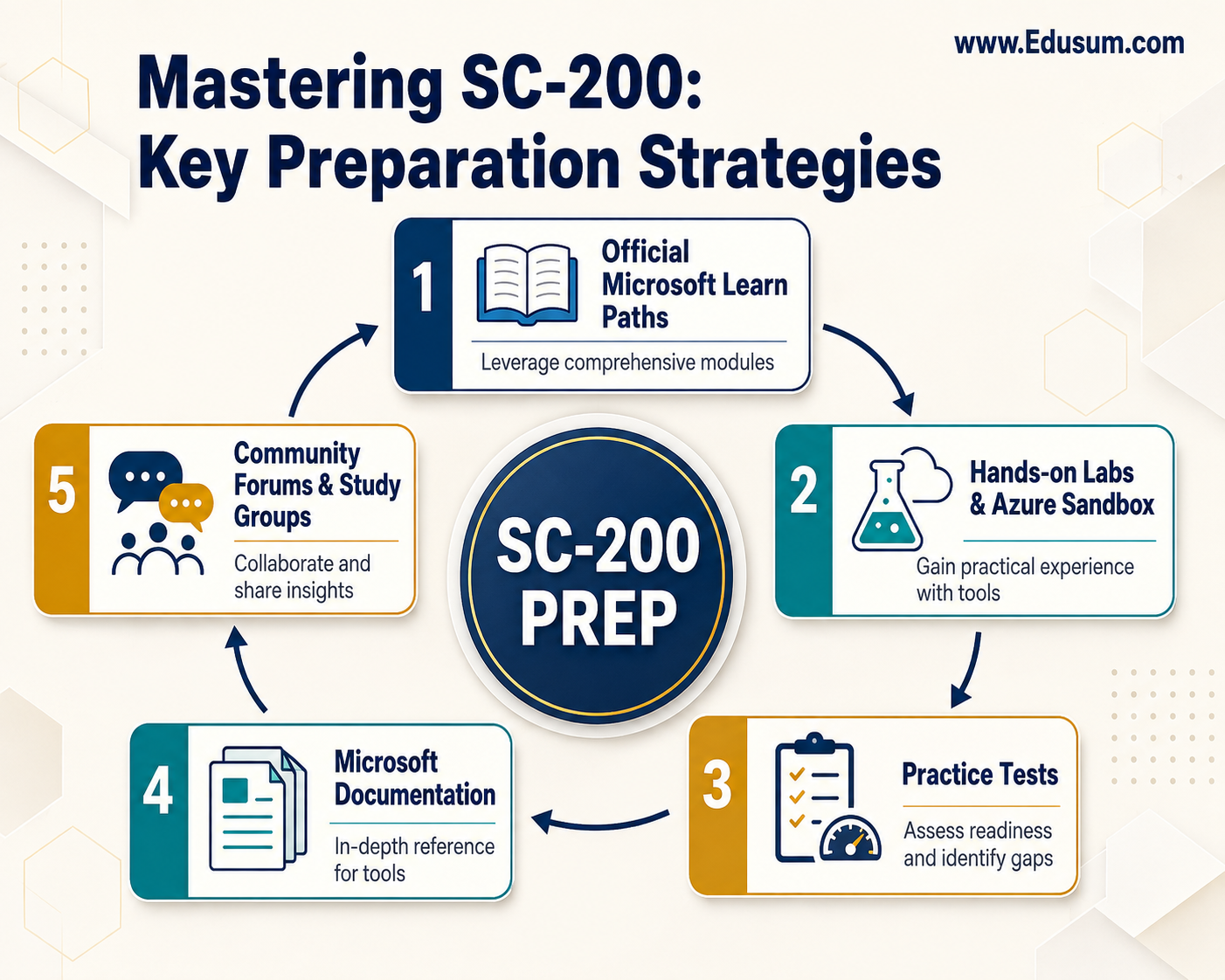
Preparing for the SC-200 certification requires a structured and consistent approach, blending theoretical knowledge with practical, hands-on experience. Since the exam emphasizes real-world application, merely memorizing facts will not suffice. Candidates need to gain comfort and proficiency with the actual Microsoft security tools. Effective preparation strategies include utilizing Microsoft Learn modules, official documentation, and practical labs to simulate real-world scenarios.
One of the most effective ways to prepare is to immerse yourself in the Microsoft security ecosystem. This involves setting up a free Azure account and experimenting with Microsoft Defender XDR components, Microsoft Sentinel workspaces, and Microsoft Entra ID Protection features. Hands-on experience helps solidify understanding and builds the confidence needed to tackle the scenario-based questions often found on the exam. Reviewing the official study guide is highly recommended to ensure all areas are covered.
Practice tests are invaluable tools for assessing readiness and identifying knowledge gaps. They simulate the exam environment and question format, allowing candidates to become familiar with the pace and style of the questions. Regularly taking practice tests helps build confidence and refine time management skills, which are crucial during the actual exam. It's important to analyze results thoroughly, focusing on understanding why certain answers are correct or incorrect, rather than just memorizing answers. For comprehensive preparation, exploring resources for practice test resources can be beneficial.
Beyond practice tests, hands-on labs are indispensable. These labs allow candidates to apply their knowledge in a controlled environment, configuring security policies, investigating alerts, and responding to simulated incidents using Microsoft's actual security platforms. Many online platforms offer guided labs specifically designed for the SC-200, which can replicate the types of tasks a Security Operations Analyst performs daily. This practical experience is often the difference between passing and failing, as it builds intuitive understanding and problem-solving skills.
While there are no formal prerequisites to take the SC-200 exam, candidates are strongly advised to possess a foundational understanding of cybersecurity concepts and experience with Microsoft Azure services. A solid grasp of networking, cloud computing, and general security principles will significantly aid in comprehending the more advanced topics covered. Prior exposure to security operations roles or a strong interest in incident response and threat mitigation is also highly beneficial.
 Candidates without this background may find themselves struggling with the pace and depth of the material. For those new to Azure, considering certifications like AZ-900 (Azure Fundamentals) or SC-900 (Microsoft Security, Compliance, and Identity Fundamentals) might be a valuable first step to build a strong base before diving into the SC-200. Understanding advanced strategies for Azure administration can also provide a helpful broader context.
The salary for a Microsoft Security Operations Analyst can vary significantly based on location, experience, industry, and the specific responsibilities of the role. However, holding the SC-200 certification generally positions candidates favorably for competitive compensation packages. As a specialized credential in a high-demand field, it signifies a valuable skill set that organizations are willing to invest in. Entry-level security operations analysts with the SC-200 might command a higher starting salary than those without specific certifications, while experienced professionals can see substantial increases.
According to various industry reports and job market analyses, the median salary for security operations analysts often falls into a comfortable range, with certified professionals typically earning on the higher end. Factors such as the size of the organization, the complexity of its security infrastructure, and the criticality of its data assets also play a role in determining compensation. Investing in the SC-200 can therefore yield a significant return on investment in terms of earning potential. The global career booster aspects of this certification contribute to its overall value.
When considering the SC-200, it's natural to compare it with other security certifications available in the market. Unlike vendor-neutral certifications (e.g., CompTIA Security+ or CISSP) that provide a broad overview of security principles, the SC-200 offers deep, hands-on expertise with a specific vendor's technology stack. This makes it particularly valuable for professionals working in or aspiring to work in environments heavily reliant on Microsoft Azure and Microsoft 365 security services.
Vendor-Neutral Certifications: These are excellent for foundational knowledge and broad industry recognition. They establish a baseline understanding but may not provide the practical depth in specific tools that the SC-200 offers.
Other Vendor-Specific Certifications: Certifications from AWS, Google Cloud, or other security vendors offer similar deep dives into their respective ecosystems. The choice between these often depends on the organization's primary cloud provider and the career path an individual wishes to pursue. A comparative analysis of Azure vs AWS certifications can help in making informed career decisions.
Complementary Certifications: The SC-200 often complements other certifications. For instance, holding a Security+ for foundational knowledge alongside SC-200 for vendor-specific expertise creates a well-rounded profile. Similarly, pairing it with other Microsoft certifications, such as SC-100 (Microsoft Cybersecurity Architect), can pave the way for architect-level roles.
Microsoft certifications, including the SC-200, are designed to remain current with evolving technologies and threats. To maintain their validity, professionals are typically required to renew their certifications periodically, often every year. This renewal process is not merely a formality; it ensures that certified individuals stay updated with the latest features, security practices, and changes in Microsoft's security offerings. The value of the SC-200 certification is thus sustained through continuous learning and validation.
The renewal process usually involves passing a free online assessment on Microsoft Learn, which tests knowledge of recent updates to the technologies covered by the certification. This mechanism guarantees that the SC-200 credential always reflects up-to-date skills, making it continuously valuable to employers. Failing to renew means the certification lapses, potentially impacting career opportunities and demonstrating a lack of commitment to ongoing professional development.
The cybersecurity landscape is constantly shifting, with new threats and vulnerabilities emerging daily. The SC-200 certification and its renewal process encourage a culture of continuous learning, which is vital for any security professional. This isn't just about passing an assessment; it's about staying abreast of industry best practices, new attack vectors, and the latest defense mechanisms.
Continuous learning through official Microsoft documentation, security blogs, community forums, and hands-on lab environments ensures that a Security Operations Analyst's skills remain sharp and relevant. This proactive approach to skill maintenance enhances job performance, increases problem-solving capabilities, and ultimately protects organizational assets more effectively. The SC-200 framework implicitly promotes this dedication to lifelong learning.
The Microsoft SC-200 certification offers substantial value for professionals aiming to specialize in security operations within a Microsoft environment. It validates critical, hands-on skills in threat mitigation, incident response, and identity protection using leading Microsoft security tools. While requiring dedicated preparation, the career growth opportunities, salary potential, and continuous relevance through renewal make it a worthwhile investment. For those serious about a career in Microsoft-centric cybersecurity, the SC-200 is more than just a certificate; it's a testament to practical expertise and a gateway to advanced roles.
To prepare effectively for your SC-200 exam, consider leveraging a mix of official Microsoft learning paths, hands-on labs, and robust practice tests. This comprehensive approach will ensure you are well-equipped to demonstrate the practical skills needed to excel as a Security Operations Analyst and secure your professional future.
1. What specific Microsoft products does the SC-200 certification cover?
The SC-200 certification focuses on using Microsoft Defender XDR (including Defender for Endpoint, Identity, Cloud Apps, and Office 365), Microsoft Sentinel, and Microsoft Entra ID Protection to manage and respond to security threats.
2. Is the Microsoft SC-200 certification suitable for entry-level cybersecurity professionals?
While there are no formal prerequisites, the SC-200 is generally more suited for individuals with some foundational knowledge of cybersecurity, networking, and cloud concepts. Entry-level professionals may benefit from first gaining basic knowledge or a fundamental certification like SC-900.
3. How does the SC-200 certification impact salary expectations?
Holding the SC-200 certification can positively impact salary expectations by validating specialized skills in a high-demand area. Certified professionals often command higher salaries compared to uncertified peers, especially in roles requiring expertise in Microsoft security solutions.
4. How often must the SC-200 certification be renewed?
Microsoft certifications, including SC-200, typically require renewal annually. This usually involves passing a free online assessment available on Microsoft Learn to ensure your skills remain current with evolving technologies.
5. What kind of job roles does the SC-200 certification prepare you for?
The SC-200 primarily prepares individuals for roles such as Security Operations Analyst, Incident Responder, Threat Hunter, or any security role focused on monitoring, investigating, and responding to threats within environments utilizing Microsoft security technologies.